Production, stock and channels
{{dashDate}} · {{dashPeriodTxt}} · values in KES at weighted average costOrder pipeline
Every production order, its stage and the next time-and-action milestone. Click a row to open it.Sewing · hourly output against target
Pieces off each line per hour today (lunch 1–2). Green at or above target, amber within 15%, red below.Finished goods by location
{{fgUnitsTxt}}Open service POs
{{spoSummary}}Needs action
{{catTitle}}
{{catIntro}} {{photoMissing}}
{{formTitle}}
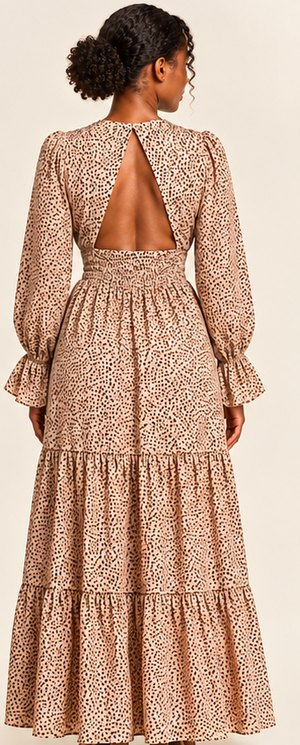
Tiered Chiffon Maxi Dress
V-neck, smocked waist, ruffle sleeves, side pockets, open back · sizes {{sizeRangeText}} · {{bomLineCount}} lines. Consumptions shown are illustrative.
Operations and thread consumption
Thread per garment = seam length × stitch ratio + wastage, graded by size. The two thread lines in the BOM are calculated from this table. Seam lengths and ratios are illustrative; confirm ratios with the thread supplier.
Material requirement for a production order
Enter the size pack. Size-sensitive trims, such as the Woven Size Label, pick the variant for each size and multiply by that size's quantity.
Production orders
Turn an approved style into a quantity to make: explode the BOM by size pack, check and reserve materials, release requests to the store.
{{trialTitle}}
{{trialSub}}New production order · H1126001 Tiered Chiffon Maxi Dress
One production order per style, one size ratio for the order, and a line for each colourway with its own number of packs. Each line becomes an MO with its own stock, bundles and SKUs.Materials · {{moSummary}}
Time and action
Material requests to the store
Cutting and bundles
Plan the lay from the marker, record what was cut roll by roll, return end-bits, and hand sewing a set of bundle tickets.
Marker (from the CAD service)
{{ctTitle}} · rolls laid (scanned at the table)
Bundles · 10 pieces each (tenant setting)
By size and roll, so each bundle is one shade. The last bundle of a size and roll takes the remainder.{{extTitle}}
Sewing output
Hourly output against target, operator output, and bundles off the line with inline checks. Entered by the supervisor or line recorder.
Pieces off the line, hour by hour (lunch 1–2)
Operator output · {{sewOpHourTxt}}
Bundles on the line and inline QC
Scan a bundle off the line when all its pieces are sewn, check it, and enter defects. Defective pieces go back for rework; the defects stay on record for DHU.Finishing and packing
Bundles from sewing move through trimming, pressing and tagging, every piece is inspected, good pieces are packed into cartons, and an AQL audit releases the order to finished goods.
{{packHead}}
{{packSub}}AQL final audit · ISO 2859-1, general level II, single sampling
{{aqlPlanTxt}} {{aqlReadyTxt}}Close-out
Account for every piece and every metre, settle leftover materials, work out actual cost and revalue finished goods. A closed order is locked.
Piece reconciliation · ordered → cut → sewn → graded → received
Material reconciliation · standard from the BOM for the pieces cut
Used = issued − returned. Usage variance over 3% is in red. Balances still with production must be returned or written off.Actual cost against pre-cost
Costing
Pre-cost per style from the BOM, the operation bulletin and the tenant's rates; the retail price that follows; and the check against actual cost after close-out.
Materials · size M, line by line from the BOM
Retail price and approval
Post-cost check · actual cost per piece of each closed order against the approved pre-cost
Styles and samples
Where a style starts: the style master, the tech pack size chart, sampling and fit sessions, and the operation bulletin timed in the sample room.
Gates for production · {{smGateTxt}}
Size chart · cm · base size M in bold
Fit session · {{fitTitle}}
Sample requests · proto → fit → size set → pre-production
Materials go on a sample material request, remnants first. Each fit result opens the next sample; a rejection adds another fit round.CAD deliverables · required on every CAD service PO
Imported as CSV from the pattern system (AccuMark, Lectra, Optitex, Seamly2D). They fill the BOM, the cutting markers and the seam lengths.Time study · on the sample marked for time study (SR-26-00038)
Time at least 5 cycles of each operation. Cycles more than 20% from the median are left out. The result is a draft SMV for the bulletin.Costing study · what the sample actually used (size M, Sand)
{{csNote}} Variance over 5% against the draft BOM is in red.Development cost · H1126001
Expensed as incurred to product development (a period cost), not added to stock. Tracked per style for range and pricing decisions.Sample against bulk · first order MO-26-00228
Operation bulletin · time study in the sample room
{{smBulletinTxt}} {{constructionTxt}}Factory costs
Enter the month's factory costs; shared costs are split by area, headcount or metered use; the factory share becomes a labour rate and an overhead rate per minute, absorbed into orders by standard minutes earned.
November 2026 · budget and actual, KES
Selling, store and head-office costs are not entered here: they are period expenses, never cost of goods.Shared costs split across cost centres · November actual
Drivers (tenant settings)
Rates per minute
Thread control
Thread is issued to lines cone for cone, weighed back at month end, and the actual is shared out to orders by their standard. {{thStdTxt}}.
Actual thread shared out to orders · November
Cones per 100 garments
Thread items · kept on each thread in the Trims and accessories catalogue
Grams per metre and the empty-cone weight turn a weigh-back into metres.Stitch library · Settings, kept by the industrial engineer
Seam lengths, rows and stitch type per operation live in the tech pack operation bulletin (Styles and samples); machines per line in the fixed asset register.Users and access
Choose a user, then tick the rights they should have. A role template gives a starting set. Every change is logged.
Users
{{aclSelName}}
Role: {{aclSelRole}}Audit log · users and rights
Finished goods
Garment SKUs and barcodes, receipt of good pieces from production, and tracked transfers to HURU's sales channels.
Receive from production
Against a released production order, after the final AQL audit passes (Stage 5). Good pieces go to FG-WH1; seconds to the Seconds location with a B suffix on the SKU. Rejects stay on the order.New transfer from FG-WH1
Transfers
Purchase orders
{{poIntro}}
New purchase order · {{npNo}}
Currency KES · delivery to Store RM1Receive goods (GRN)
Receive only against a confirmed PO. Scan the barcode on the supplier's label, then record each roll.
1. Purchase order
2. Scan or pick the material
3. Record {{recUnitWord}} · {{recLine.name}}
{{recLine.techLine}}Inspection and delivery approval
Basic check per roll or lot. A delivery can be approved only when nothing in it is still pending.
Deliveries
Stock and rolls
Every roll and lot with its SKU, length, bin and status.
Issue to production
The system proposes rolls: same dye lot first, then oldest. Rolls on hold are never proposed.
Reorder suggestions
Generated by the system for replenished materials. Rules recalculate weekly from usage, planned production and actual supplier lead time.
Stock at vendors
Material sent out on service POs stays company stock until it is used, returned or charged back.
Unexplained loss above zero blocks approval of that vendor's bill until it is charged back, written off with approval, or corrected. Rows in amber have been out longer than 21 days.
Online dispatch
Orders from the online shop: pick from the e-commerce stock room, pack into a non-woven bag, hand to the courier. The bag is a fulfilment cost, not part of garment cost.
Orders
Channel packaging this month
{{chTotTxt}}1. Margin by style produced
Styles with orders closed this month. Margin before VAT at the approved retail price; seconds valued at the seconds weight. {{stNote}}2. Exceptions to act on
Below-minimum margins, orders over pre-cost and prices awaiting approval.3. Cost and margin by colourway · H1126001
Costs per piece on the standard size curve, so colourways compare like for like. Actual = pre-cost × (actual ÷ pre-cost) of the latest closed order. Retail margin before VAT.4. Price lists and promotions · H1126001
Approved prices with planned and actual margins against each list’s minimum.5. Closed orders: pre-cost against actual
Cost per equivalent piece; margin at today’s retail price.6. Online sales this month
From shipped online orders. Sales before VAT; packaging charged to the channel.7. Margin by SKU · H1126001
Every colourway and size at the retail price, including size overrides.Bought-in goods
Finished items HURU buys ready-made, local or imported. Each purchase order goes: arrive, count, inspect (AQL), approve landed cost, swing-tag and relabel where needed, then into stock and on sale. No BOM, cutting or sewing.
Prices and margins
H1126001 Tiered Chiffon Maxi Dress · one price per style for every colourway and size, with optional size overrides. Merchandiser proposes, finance lead approves. Margins are worked out automatically.
Price builder · H1126001
Build the retail price from the size mix you expect to make and sell, check every size against the minimum, then propose it for approval.ERP connection
The app works on its own. Connecting an ERP is optional and changes only where some records start and where totals are sent.
Product categories
Every finished style sits in one category and one subcategory. Used for the style list, reports and the online shop. {{catTotTxt}}
Costing and quality rules
Agreed after the trial run. Changes apply to orders closed from now on.